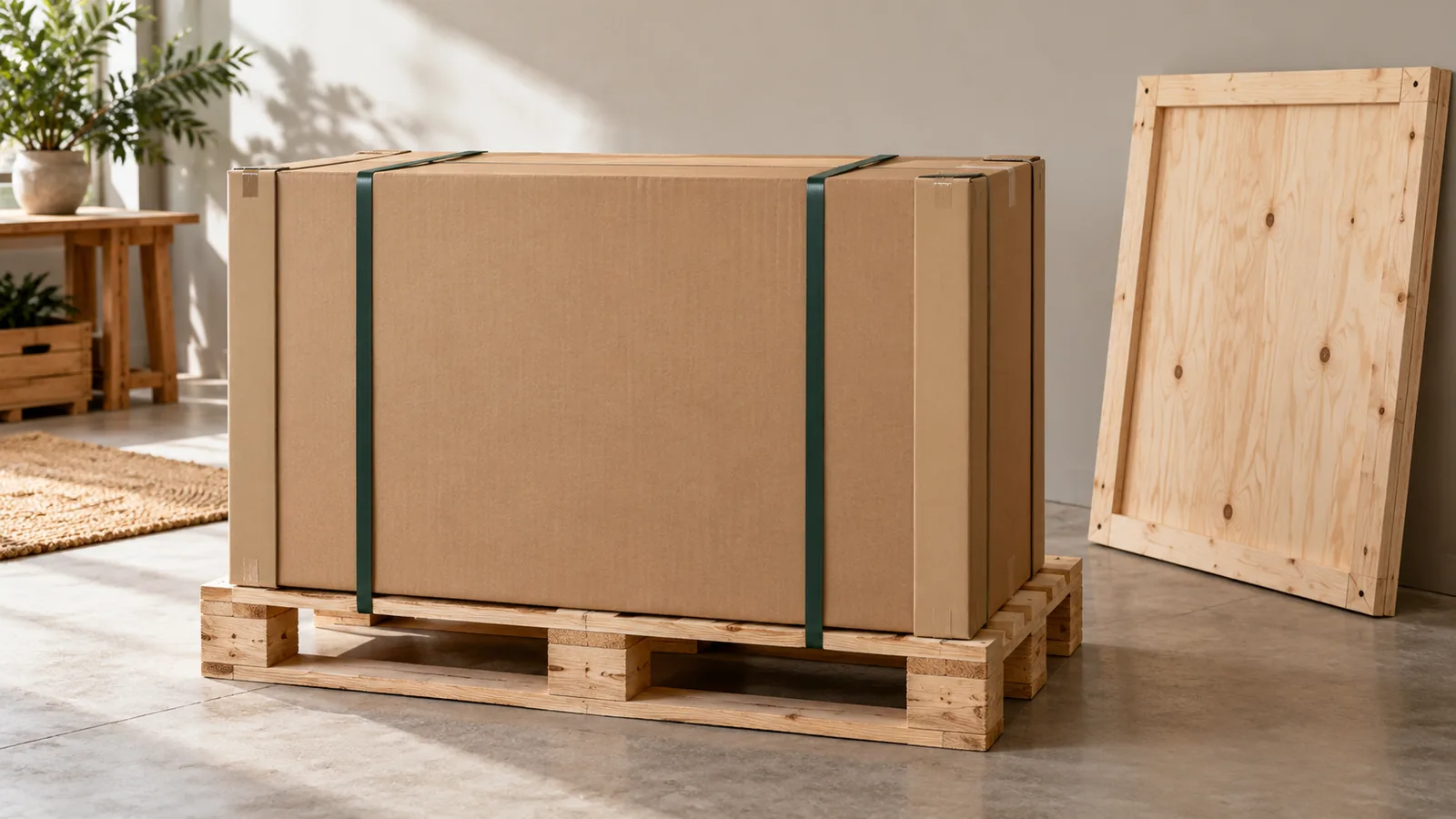
AI-generated illustrative image for general furniture sourcing guidance.
Furniture packaging is part of shipment planning
When sofas and other furniture move across borders, the packaging must protect the goods during handling and transport. Buyers should confirm the packaging design, dimensions, carton markings and any destination-specific requirements before dispatch.
One issue to check is whether the shipment uses wood packaging material that may be regulated at destination, such as wooden pallets, crates or dunnage. The International Plant Protection Convention (IPPC) publishes ISPM 15, an international standard addressing the phytosanitary treatment and marking of certain wood packaging material used in trade.
What is ISPM 15?
ISPM 15 concerns phytosanitary measures for regulated wood packaging material. The aim is to reduce the risk that pests move across borders in wood used to support, protect or carry goods.
The IPPC's 2023 implementation guide covers approved treatment options, use of the ISPM 15 mark, production and repair of wood packaging, import inspections and responses to non-compliance.
ISPM 15 covers wood packaging material made from raw wood and excludes packaging made wholly from processed wood material such as plywood; it also exempts packaging made entirely from wood 6 mm or less in thickness. These scope rules concern the packaging, not the sofa. The importing country’s implementation and any additional import controls must still be checked.
What should furniture buyers confirm?
Before dispatch, buyers and logistics partners should discuss:
- Whether the shipment will use solid-wood pallets, crates or dunnage.
- Whether those materials fall within the destination country's ISPM 15 requirements.
- Whether required treatment and marking have been completed by the responsible provider.
- Whether the marks are legible and match the applicable requirements.
- Whether the destination country has additional or different import controls.
- Who will check packaging compliance before the cargo is released for shipment.
Do not assume that a supplier's general statement that packaging is “export ready” answers every destination-specific requirement. Confirm the actual packaging materials and destination rules.

AI-generated illustrative image for general furniture sourcing guidance.
Packaging quality still matters
Phytosanitary compliance is only one part of export packaging. Buyers should also agree on how the sofa will be protected from abrasion, pressure, moisture and movement during handling. The packaging specification may need to account for the product's shape, removable components, upholstery, storage method and the buyer's receiving process.
Confirm carton dimensions and weights, package counts, labels and packing-list information in advance. If the buyer has warehouse, retail or container-loading requirements, include them in the written packing instructions.
A pre-shipment checklist
Before a furniture shipment leaves, confirm that:
- Packaging materials and dimensions match the approved packing plan.
- The product is protected against expected handling and transport risks.
- Any regulated wood packaging has been checked against destination requirements.
- Required treatment marks or documentation are present where applicable.
- Carton labels, package counts and shipping documents are consistent.
- Responsibility for final checks is clear.
Confirm destination requirements
Import rules and implementation practices can differ by country and may change. Consult the destination country's national plant protection organisation or customs authority, and use the IPPC's official resources as a starting point. This article is a practical overview, not a substitute for country-specific import advice.
If you are sourcing sofas for export, share your destination market and packaging requirements early so that the packing plan can be discussed before dispatch.
Explore our sofa product references or share your requirements.