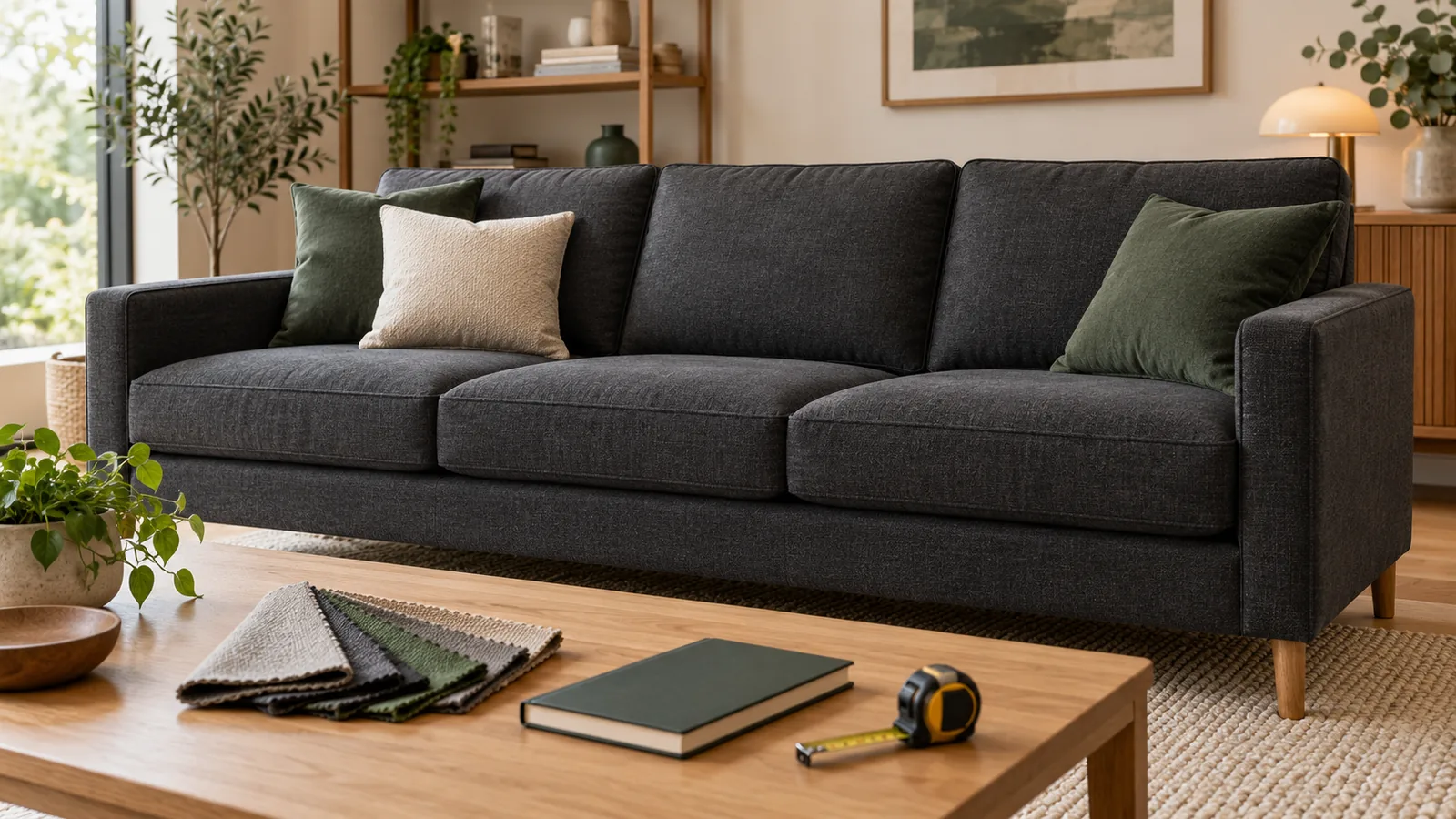
AI-generated illustrative image for general furniture sourcing guidance.
Start with one comparable sourcing brief
The lowest quote is difficult to assess when suppliers are pricing different sofas or different services. Before approaching suppliers, give each one the same brief and ask them to identify any assumptions or exclusions in their offer. This helps importers, wholesalers and retailers compare the proposed product, not just the unit price.
Record the destination market, intended use, sofa configuration, target dimensions, upholstery and colour preferences, and any known frame, cushion or assembly requirements. Specify which details are fixed and which can be discussed. For private-label work, ask which elements can be changed, such as fabric, leg finish, labels or packaging; do not assume every option is available.
Compare quotations on the same basis
Ask for a written quotation that identifies the proposed specification, sample charges if any, minimum order quantity, packaging, delivery term and named place, estimated production timing, and any testing or documents included. Request a separate list of exclusions and options that would change the price. Treat a quoted lead time as a proposal to confirm for that order, not a standing guarantee.
If two offers use different fabrics, cushion constructions or packing methods, note those differences before ranking prices. Ask follow-up questions in writing so the final comparison reflects the same scope.
Review a sample against written criteria
Agree what a sample is intended to approve. Check dimensions against the drawing; upholstery colour, texture, seams and pattern alignment; cushion feel; stability and assembly; and visible labels or care information relevant to the order. Record the sample identifier, inspection date and any requested changes.
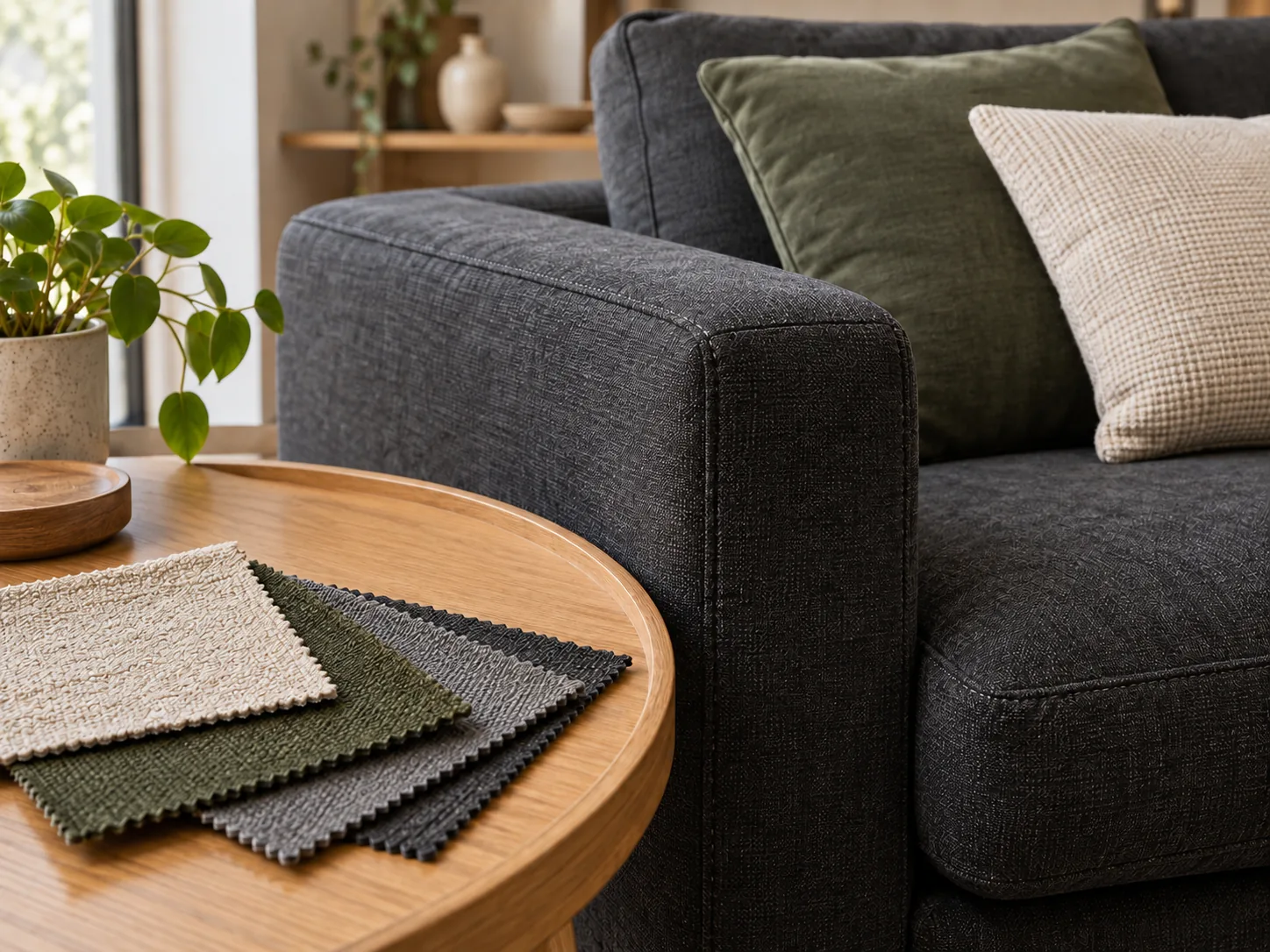
AI-generated illustrative image for general furniture sourcing guidance.
Photographs are useful records, but lighting can distort colour and images cannot establish dimensions or internal construction. Keep an approved specification and a written change list alongside sample photos. If the sample is revised, identify which version governs production.
Ask how quality issues will be handled
Before placing an order, agree which characteristics will be checked, at what stage, and against which approved specification or sample. For example, ask how dimensions, upholstery workmanship, component completeness, appearance, packaging and carton markings will be recorded. Clarify who reports a nonconformity, who authorizes a correction, and when a changed item must be resubmitted for approval.
Where a buyer or destination market requires a performance test, ask which standard and edition apply to the exact product and intended use, who will conduct the test, and what report will be supplied. Do not treat a general claim of “tested furniture” as evidence for a particular sofa.
Identify market requirements before finalizing the specification
Product safety, labelling, chemical, fire-safety and documentation requirements can vary by product and destination. Make a requirements list for the intended market and determine who will provide each document, label or test report. When the scope is uncertain, confirm it with the relevant regulator, qualified adviser or testing body before committing to a claim or label.
Set packaging and shipment requirements early
Ask how the sofa and its removable parts will be protected during handling and transport. Confirm package count, carton dimensions and weights, markings, packing-list details and any warehouse or retail handling needs. Review the proposed packaging with the sample or approved specification rather than leaving it until dispatch.
If a shipment uses raw-wood pallets, crates or dunnage, check the destination country's requirements for wood packaging material. IPPC's ISPM 15 addresses regulated wood packaging used in international trade; its scope includes dunnage and does not extend to every packaging material or to the sofa itself. Ask the shipping parties what packaging will actually be used and how applicable requirements will be met.
Keep decisions in one version-controlled record
Name the people who can approve the product specification, sample, packaging and changes. Keep the latest approved files together, with dates and version identifiers. If a change affects price, appearance, testing or delivery, request an updated written confirmation before accepting it.
Before issuing a purchase order, confirm these seven points:
- The product specification and destination market are recorded.
- Quotations identify inclusions, exclusions and delivery terms.
- The sample or sample-approval process is documented.
- Quality-check criteria and issue resolution are agreed.
- Packaging and shipment details are confirmed.
- Applicable labels, tests and documents have named owners.
- Changes require written approval against a controlled version.
To start a sourcing discussion, share your target market, sofa type, approximate quantity, material preferences and packaging needs. Explore our sofa product references, then send your requirements through the inquiry form.